The Malaysian construction market is diverse. From the high-rise towers of Kuala Lumpur to the infrastructure projects of Johor and the housing estates of Penang, concrete is the common denominator. For many contractors, the self-loading concrete mixer has become an essential tool. It combines aggregate loading, mixing, and transport into one machine. It reduces labour. It increases productivity. It provides independence from ready-mix suppliers. Yet buying a self loading mixer is a significant investment. The Malaysian market offers many brands and price points. The caring argument of this guide is that the lowest price is not always the best value. Support, parts availability, and machine reliability are equally important. This guide focuses on AIMIX, a manufacturer with branches in Malaysia, as a case study of a supplier that balances price and support. The objective is to help buyers navigate the market, ask the right questions, and select a machine that will serve them well for years.
Understanding the Malaysian Self-Loading Mixer Market
Price Ranges and What They Include
Self-loading concrete mixer prices in Malaysia vary significantly. A 1.2 cubic meter mini cement mixer machine from an entry-level brand may cost RM 35,000 to RM 50,000. A mid-range 1.8 cubic meter machine from a established brand may cost RM 65,000 to RM 90,000. A premium 2.5 cubic meter machine with a Kubota engine and advanced hydraulics may cost RM 120,000 to RM 180,000. The price differences reflect engine quality, hydraulic system design, weighing accuracy, and build quality. The caring advice is to look beyond the price tag. A machine that costs RM 40,000 but breaks down monthly will cost more in lost revenue than a machine that costs RM 70,000 and runs reliably. The buyer should also ask what is included in the price. Does it include delivery to your site? Does it include operator training? Does it include a spare parts kit? Does it include a warranty? The answers to these questions can add RM 5,000 to RM 15,000 to the effective cost. A transparent supplier will answer clearly. A less transparent supplier will leave you to discover the gaps later.
The Importance of Local Support
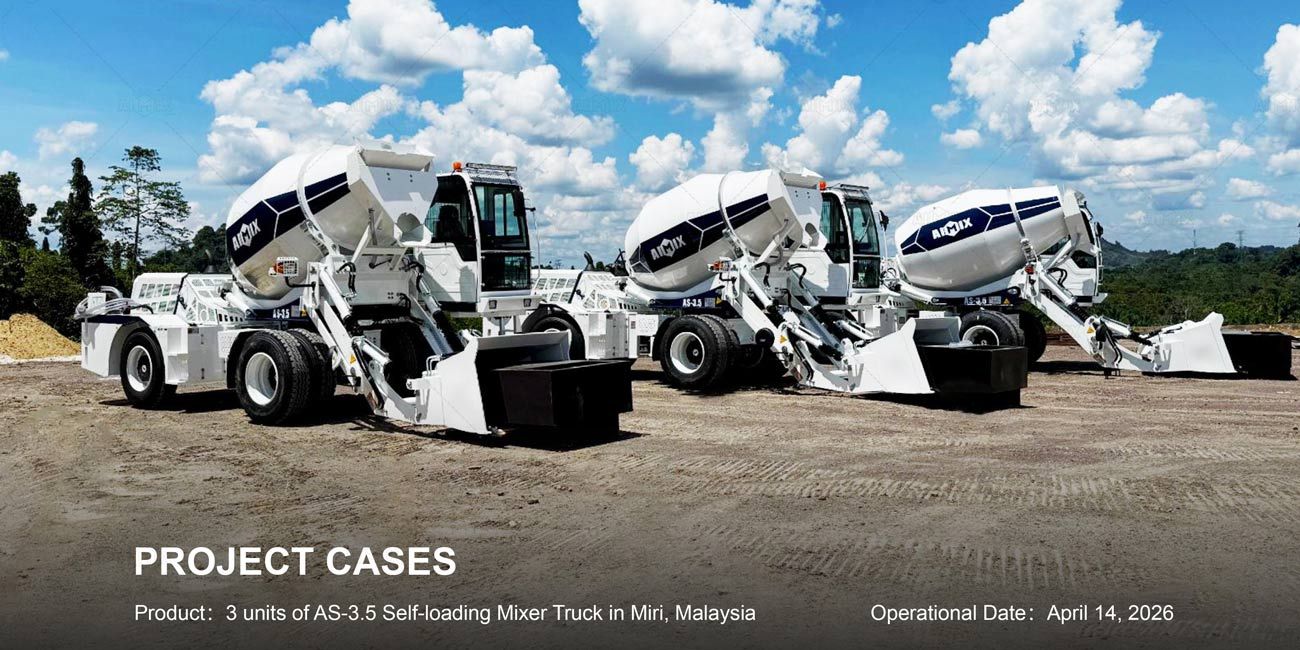
The caring argument centres on local support. A self-loading mixer will need maintenance. It will need spare parts. It may need repairs. A supplier without a physical presence in Malaysia cannot provide timely support. Parts ordered from overseas may take weeks. A technician flown in from China or Turkey will cost thousands in travel and accommodation. The machine will sit idle. The project will be delayed. The buyer will be frustrated. AIMIX has established branches and service centres in Malaysia. This local presence means spare parts are stocked locally. Technicians are based locally. Response times are measured in hours, not weeks. The caring advice is to prioritise suppliers with local branches, even if their machine price is slightly higher. The total cost of ownership will be lower, and the peace of mind will be higher.
Specifications to Consider for Malaysian Conditions
Engine Choice: Kubota vs. Chinese Domestic
The engine is the heart of the self-loading mixer. The two main options in the Malaysian market are Kubota (Japanese) and Chinese domestic engines (Weichai, Yuchai). A Kubota engine is more expensive, adding RM 10,000 to RM 20,000 to the machine price. It is also more fuel-efficient, quieter, and longer-lasting. A Kubota engine will typically last 10,000 to 15,000 hours before a major overhaul. A Chinese domestic engine may last 5,000 to 8,000 hours. The caring advice is to consider your expected annual operating hours. If you will operate the machine 500 hours per year, the Chinese engine may be adequate. If you will operate 1,500 hours per year, the Kubota engine is likely the better investment. The fuel saving alone may cover the premium within two years.
Weighing System: Load Cells vs. Volumetric
The second critical specification is the weighing system. A volumetric machine measures materials by bucket position or hydraulic cylinder extension. It is less accurate. A machine with load cells measures materials by weight. It is more accurate. The difference in concrete quality is significant. A volumetric concrete mixer Malaysia may vary from the target mix by 10 to 15 percent. A load cell machine typically varies by 2 to 3 percent. The caring advice is to specify a machine with load cells if you are producing concrete for structural applications. The additional cost—typically RM 8,000 to RM 15,000—is justified by the reduction in cement waste and the elimination of rejected loads. A machine with load cells also provides batch records. These records are valuable for quality assurance and for disputes with customers.
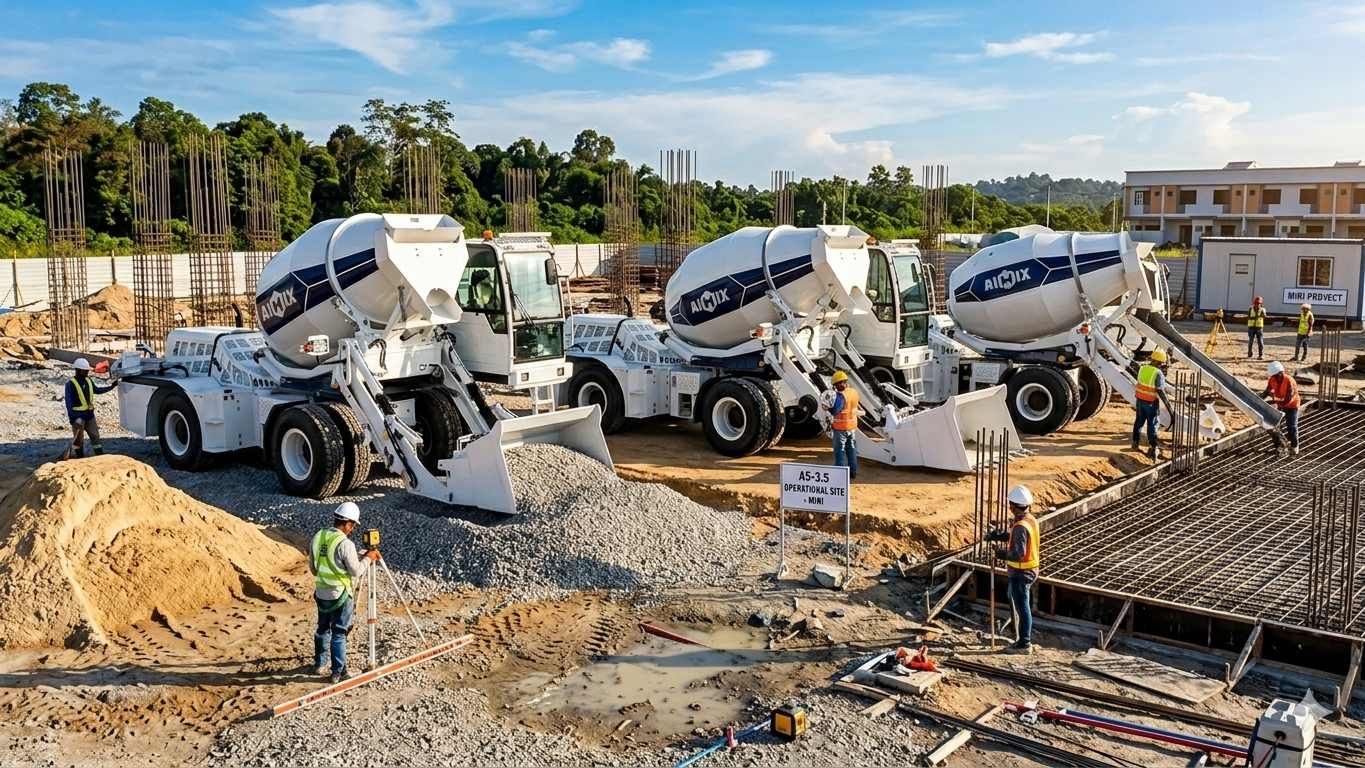
Malaysian sites vary. Some are paved. Some are muddy. Some are rocky. The caring advice is to select a tyre pattern suited to your typical site. Road-pattern tyres are adequate for paved sites. Bar-pattern tyres are better for muddy sites. The tyre upgrade may cost RM 1,000 to RM 3,000. It is worth it if it prevents the machine from getting stuck. The caring advice is also to ask about ground clearance. A machine with 300mm of clearance will navigate most Malaysian sites. A machine with 250mm may struggle on rutted tracks. The specification sheet will list the clearance. The buyer who ignores it may regret the decision.
Making the Purchase: Price, Payment, and Delivery
Negotiating the Best Price with AIMIX Branches
AIMIX branches in Malaysia offer competitive pricing. They also offer room for negotiation. The caring advice is to obtain quotes from at least two AIMIX branches or dealers. The prices may differ. The negotiation should focus on the total package, not just the machine price. Ask the dealer to include delivery, training, and a spare parts kit. Ask for an extended warranty. AIMIX typically offers a 12-month warranty. A 24-month warranty may be available for an additional cost. The caring advice is to calculate the value of these inclusions. A spare parts kit worth RM 3,000 is valuable. Free delivery worth RM 1,000 is valuable. The buyer who negotiates the total package will achieve better value than the buyer who focuses only on the machine price.
Payment Terms and Financing Options
The final consideration is payment. AIMIX and other established suppliers typically require a deposit of 30 to 50 percent. The balance is due before delivery or upon commissioning. The caring advice is to avoid paying 100 percent upfront. A deposit of 30 percent is standard. The balance should be paid after the machine has been delivered, assembled, and tested. This sequence protects the buyer. If the machine arrives damaged or does not function as specified, the buyer retains leverage. Financing is available through Malaysian banks and equipment finance companies. The interest rates are typically 4 to 8 percent. The caring advice is to compare the financing cost to the cost of paying cash. If cash is available, paying cash avoids interest. If cash is scarce, financing is a reasonable option. The key is to factor the interest cost into the total cost of ownership. A machine that costs RM 80,000 with cash costs RM 88,000 with financing at 10 percent over two years. The buyer must decide whether the convenience of financing is worth the premium.
The caring conclusion is that buying a self-loading concrete mixer in Malaysia requires attention to price, specifications, and support. The buyer who prioritises local support, accurate weighing, and a reliable engine will achieve better long-term value than the buyer who chases the lowest upfront price. AIMIX branches in Malaysia offer a balance of competitive pricing and local support. The caring advice is to visit a branch. See the machines. Speak to the technicians. Ask for references. Then make an informed decision. The right machine will serve your business for years. Choose carefully.