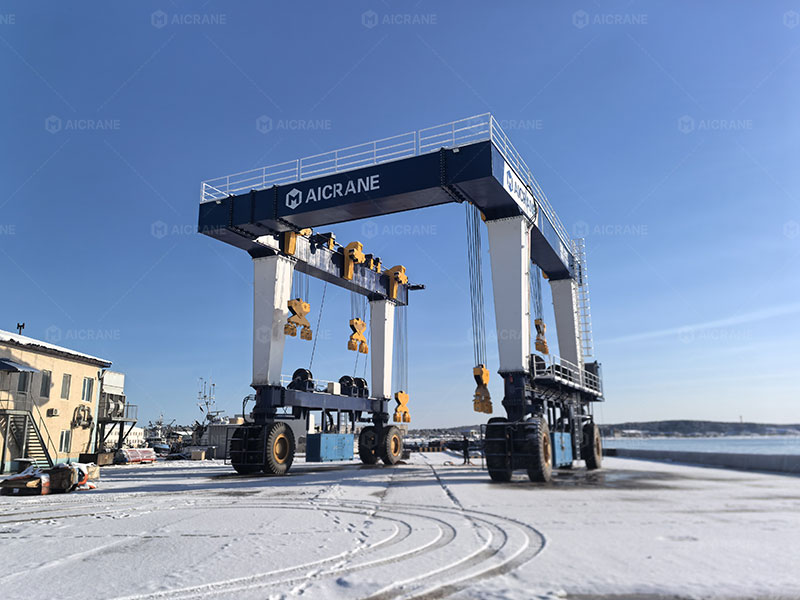
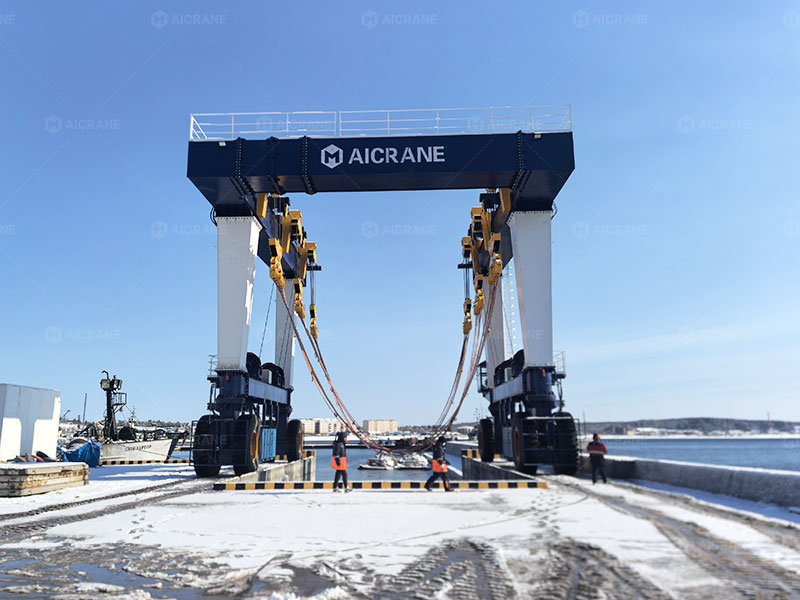
As the boating season winds down and the temperature drops, shipyards and marinas face a critical transition. While the focus is often on winterizing the vessels themselves, the equipment that hauls them – the Marine Travel Lift – is often the unsung hero that requires its own rigorous winter preparation.
A marine travel lift is a massive investment. Leaving it exposed to freezing temperatures, road salt, and stagnant fluids without proper care is a recipe for hydraulic failure, structural corrosion, and expensive downtime come spring. To ensure your mobile boat hoist survives the frost and is ready for the spring “launch rush,” follow this comprehensive guide to professional winterization.
1. The Critical Importance of Hydraulic System Care
The hydraulic system is the lifeblood of your travel lift. In sub-zero temperatures, hydraulic fluid undergoes physical changes that can compromise the entire machine.
Fluid Viscosity and Contamination
Standard hydraulic oil can thicken significantly in the cold, leading to “cavitation” – a phenomenon where the pump is starved of oil, causing internal damage.
-
Check the Grade: If your region experiences extreme lows, consult your manufacturer about switching to a low-viscosity or multi-grade “winter” hydraulic oil.
-
Water Removal: Condensation is the enemy of hydraulics. As temperatures fluctuate, moisture builds up inside the reservoir. Before the first freeze, drain a small amount of fluid from the bottom of the tank to check for water. If the oil looks milky, a full fluid change and filter replacement are mandatory. Water in the lines can freeze, expanding and cracking valves or blowing seals.
Cylinder Protection
Exposed hydraulic cylinder rods are prone to “flash rust” when sitting idle in salty, damp winter air.
-
Retract Completely: Whenever possible, store the lift with all cylinders fully retracted to keep the polished rods submerged in protective oil.
-
Grease Exposed Chrome: If a cylinder must remain extended, apply a thick layer of marine-grade anti-corrosion grease or a specialized “corrosion block” spray to the exposed rod.
2. Engine and Fuel System Stabilization
Whether your marine boat hoist runs on Diesel or Gasoline, the engine is highly susceptible to winter-related degradation.
Fuel Treatment
Diesel fuel is notorious for “gelling” in cold weather, where paraffin wax precipitates out of the fuel and clogs filters.
-
Biocide and Stabilizer: Treat your fuel tank with a high-quality stabilizer and biocide to prevent “algae” (microbial growth) during the months of inactivity.
-
Top it Off: Keep the fuel tank full (95% capacity) to minimize the “headspace” where moist air can condense into water.
Cooling System
Check your engine’s coolant with a refractometer. Ensure the antifreeze-to-water ratio is sufficient for your local record lows (usually a 50/50 or 60/40 mix). An engine block cracked by frozen coolant is an avoidable, five-figure mistake.
3. Electrical Systems and Battery Longevity
Batteries hate the cold. A lead-acid battery can lose up to 50% of its capacity when the temperature hits 0°C (32°F).
-
Charging Regimen: If the lift will be parked for months, remove the batteries and store them in a climate-controlled area on a trickle charger. If they must stay on the machine, ensure they are fully charged; a fully charged battery freezes at a much lower temperature than a discharged one.
-
Terminal Protection: Clean the terminals with a wire brush and apply a dielectric grease or terminal protector spray to prevent the “white fuzz” of oxidation.
-
Control Panel Care: Ensure the control console and electrical cabinets are sealed. Place silica gel desiccant packets inside the control box to absorb moisture that could short out PLC boards or relays.
4. Wire Ropes and Sheaves: The “Hidden” Risks
The wire ropes (cables) are subjected to immense tension and harsh environments. In winter, trapped moisture inside the strands of the cable can freeze and expand, causing internal fraying.
-
Pressure Lubrication: Use a penetrating wire rope lubricant. Unlike standard grease, these are designed to soak into the core of the cable, displacing moisture and providing a barrier against salt air.
-
Inspection: Look for “bird-caging” or broken strands. It is much easier to order replacement cables in December than to realize you need them during the April rush.
-
Sheave Greasing: Ensure the sheaves (pulleys) are purged with fresh grease to push out any water that may have entered during the wet autumn months.
5. Tires and Structure
The physical footprint of the lift, whether a 50 or 500 ton travel lift, needs attention to prevent “flat-spotting” and structural degradation.
Tire Pressure and Placement
-
Over-Inflate Slightly: Tires naturally lose pressure in the cold. Check the manufacturer’s specs and keep them at the high end of the recommended PSI.
-
Surface Matters: Avoid parking the lift on bare dirt or in a puddle that might freeze. Ideally, park it on concrete or heavy timber mats. If the tires freeze into the ground, attempting to move the lift in the spring can tear the tread or damage the drive motors.
-
UV Protection: If stored outdoors, consider covering the massive tires with UV-resistant tarps. Winter sun can be surprisingly damaging to rubber compounds.
Structural Integrity
Walk the frame and look for chipped paint or exposed metal.
-
Touch-Up Paint: Any exposed steel will rust rapidly in winter. Sand down these spots and apply a zinc-rich primer.
-
Sling Inspection: Remove the lifting slings if possible and store them in a dry, dark place. If left hanging, they can collect ice, which adds unnecessary weight and can damage the fibers of the webbing.
6. The “Hibernation” Checklist
Before you lock the gate for the season, perform these final steps:
-
Lock the Brakes: Ensure the parking brake is engaged and/or the wheels are chocked.
-
Exhaust Seal: Cap the engine exhaust pipe to prevent birds, rodents, or driving snow from entering the manifold.
-
Grease Everything: Every grease fitting (Zerk) on the machine should be pumped until fresh grease exits the seals. This “purging” ensures there is no room for water to sit.
7. The Spring Outlook: Why Winterization Matters Now
Investing two days of labor in November saves two weeks of repairs in April. When the ice thaws and the fleet of boats is waiting to hit the water, you cannot afford a blown hydraulic hose or a seized engine.
Proper winterization isn’t just about protection; it’s about liability and safety. A machine that has been properly “put to bed” is a machine that will operate predictably and safely when the heavy lifting begins again.
Expert Tip: Create a “Winterization Log” for your lift. Document the fluid levels, the date of fuel treatment, and the condition of the cables. This creates a paper trail for insurance and resale value, proving that the equipment has been maintained to the highest professional standards.
By following these steps, you aren’t just storing a machine – you are preserving your marina’s most vital asset. Stay warm, stay diligent, and your marine travel lift will be ready for the first haul-out of the new year.
If you encounter specific technical challenges during the winterization process or require the detailed maintenance manual for your specific model, Contact Aicrane engineering department for professional advice on hydraulic fluid selection for extreme low temperatures or electrical system protection.