The global road construction industry relies heavily on optimizing capital expenditure while maximizing operational efficiency. At the heart of this economic balance is the heavy machinery used to produce hot mix asphalt. For infrastructure developers and contractors, understanding how the initial asphalt plant price(planta de asfalto precio) relates to how intensively that asset is used over its operational lifespan is critical for long-term profitability. This dynamic becomes particularly clear when analyzing regional infrastructure markets where terrain, logistics, and public investment fluctuate significantly.
The Structural Interplay of Asset Pricing and Factory Output
When an infrastructure company evaluates an industrial asphalt mixing plant, the decision is rarely just about the upfront cost. The true economic value is locked within the relationship between the baseline investment—the overall asphalt plant price—and the capacity utilization rate. The capacity utilization rate represents the percentage of potential maximum output that is actually achieved during regular operations. A high initial asphalt plant price requires a matching high utilization rate to amortize fixed costs and achieve a favorable return on investment (ROI).
Amortization of Capital Expenditures (CapEx)
An industrial asphalt mixing plant represents a substantial fixed asset. If a contractor purchases a high-capacity system at a premium asphalt plant price but only operates it at 30% of its total output due to regional project delays, the fixed cost allocated to each ton of produced material skyrockets. Conversely, maintaining a capacity utilization rate above 70% allows the business to spread the initial procurement costs across millions of tons of aggregate mix, driving down the unit cost of production and making subsequent project bids much more competitive.
Technology Levels Affecting Upfront Costs
Advanced systems featuring automated control panels, real-time aggregate weighing sensors, and multi-fuel hybrid burners command a higher market asphalt plant price. However, these technological integrations are designed specifically to stabilize the capacity utilization rate. By preventing unscheduled maintenance downtime and reducing human batching errors, high-tier machinery maintains consistent operational flow where cheaper, manual alternatives experience frequent interruptions.
Evaluating Localized Market Shifts: The Andean Example
The economic relationship between purchase cost and asset utilization shifts dramatically when applied to developing markets with rugged geographical landscapes. A clear example of this dynamic can be seen when observing the acquisition trends of an asphalt plant Peru(plantas de asfalto Perú) contractors deploy for nationwide connectivity projects.
In the Peruvian market, infrastructure development often moves along two distinct tracks: massive highway contracts like the Pan-American highway expansion, and isolated regional road paving across the Andean highlands. Companies looking for an asphalt plant Peru can rely on must balance the local cost of importing heavy components with the realistic amount of continuous work available in specific departments like Cusco or Ancash. If a firm imports a heavy stationary batching system, the overall asphalt plant price will include substantial maritime freight charges and challenging inland heavy-haul transport across mountain passes.
Once positioned, if the local government delays funding for regional feeder roads, the plant sits idle. In this scenario, a high initial asphalt plant price coupled with a depressed local capacity utilization rate can place severe financial strain on a medium-sized construction enterprise. Consequently, businesses seeking an asphalt plant Peru offers for local tenders must carefully forecast their seasonal output to ensure their utilization rates remain profitable.
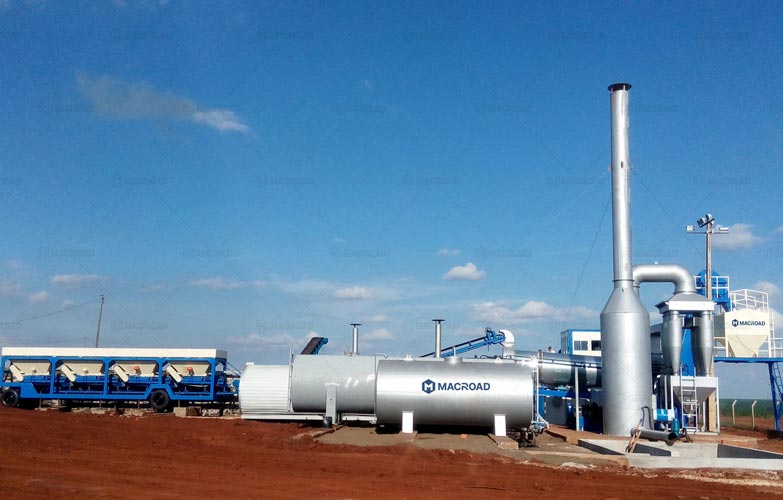
Mobility vs. Performance: Pricing Nuances of Portable Units
To mitigate the financial risks associated with underutilized stationary assets, the road construction sector has shifted heavily toward portable configurations. This shift has created an independent pricing structure where physical mobility acts as an economic hedge against low utilization rates.
| Plant Configuration Type | Relative Upfront Price Range | Average Capacity Utilization Trigger | Primary Geographic Advantage |
|---|---|---|---|
| Standard Stationary Batch | Baseline Asset Price | Requires high, centralized regional volume | Permanent industrial zoning, urban periphery |
| Mobile Chassis Drum/Batch | 20% to 40% Higher premium per ton capacity | Maintained by rapid sequential relocation | Linear highway construction, remote regions |
The Premium on Portability
Engineering data indicates that a mobile asphalt plant price is typically 20% to 40% higher than a stationary variant with identical hourly tonnage output. This pricing premium reflects the cost of integrated trailer chassis, individual running gear, modular electrical connections, and quick-disconnect piping. Despite the higher mobile asphalt plant price, the asset becomes much easier to justify financially because it directly decouples the owner from the economic limitations of a single job site.
Maximizing Lifetime Utilization via Relocation
When a road paving project wraps up in one province, a portable unit can be disassembled, towed, and re-commissioned at a new site within a matter of days without requiring heavy foundation pours. Therefore, while the initial mobile asphalt plant price demands more upfront capital per ton of nominal capacity, the owner can maintain an overall capacity utilization rate of 75% across multiple consecutive small-scale contracts, whereas a stationary alternative would drop to 0% utilization once the local project concludes. Thus, the premium mobile asphalt plant price serves as an investment in guaranteed long-term utilization.
The Ripple Effect of Component Configuration on Market Price
Beyond mobility, the internal mechanics of the system dictate the final market valuation. Procurement teams must carefully calculate how structural configurations influence both the baseline asphalt plant price and its long-term operational efficiency.
Continuous Mixing vs. Batch Precision
Continuous drum systems offer a lower market asphalt plant price because they eliminate complex screen decks, hot bins, and independent pugmills. For projects where standard asphalt concrete is sufficient, a drum design provides maximum output per dollar spent. However, if local environmental laws or strict highway specifications require precise batching and high percentages of recycled asphalt pavement (RAP), a batch mix asphalt mixing plant(planta mezcladora de asfalto) becomes mandatory, despite commanding a higher market price.
Environmental and Efficiency Retrofits
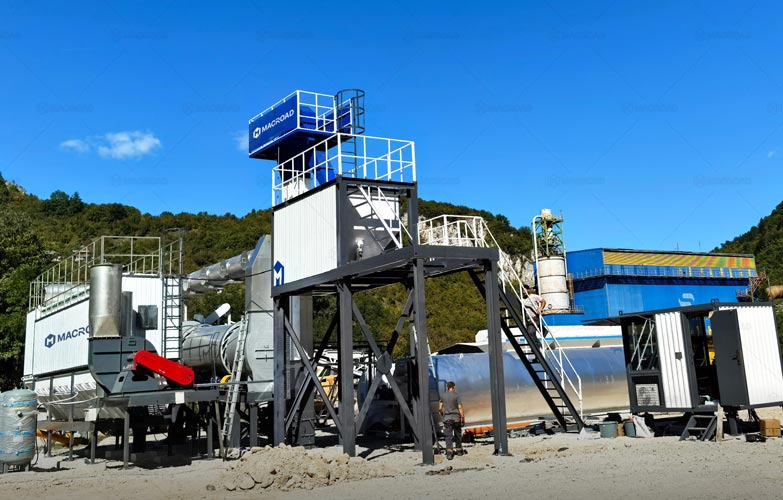
Modern regulatory compliance also shapes the modern asphalt mixing plant pricing matrix. Integrating dual-stage baghouse filtration units, blue-smoke capture systems, and insulation jackets adds roughly 10% to 30% to the initial equipment quote. Yet, these features prevent regulatory shutdowns by local environmental agencies. In the long run, paying a higher baseline asphalt mixing plant price protects the contractor from forced operational stoppages, keeping the capacity utilization rate steady and predictable throughout the construction season.
Strategic Conclusions for Fleet Optimization
Ultimately, purchasing asphalt production machinery requires balancing market opportunity against capital exposure. Opting for a low initial asphalt plant price might appear financially safe on paper, but if that machinery suffers from high maintenance downtime or lacks the mobility to follow changing project demands, its low utilization rate will erode profit margins. Conversely, paying a premium for a modular asphalt mixing plant or absorbing the higher mobile asphalt plant price(planta de asfalto móvil precio) provides the operational agility needed to sustain high utilization rates, ensuring long-term financial health in competitive infrastructure markets like Peru and across the broader Latin American region.