Manufactured sand has become an increasingly important alternative to natural river sand as construction industries face growing shortages of suitable aggregates and stricter environmental regulations. However, not every rock type produces the same quality of manufactured sand. The geological characteristics of the source material directly influence particle shape, gradation, strength, durability, and processing efficiency.
Among the most commonly selected rocks for manufactured sand production, granite, basalt, and limestone each offer unique advantages and challenges. Granite provides exceptional hardness and durability, basalt delivers strong mechanical properties with excellent wear resistance, while limestone offers easier processing and favorable particle characteristics. Choosing the right raw material requires a comprehensive understanding of the final application, production requirements, and crushing technology.
Comparing Granite, Basalt, and Limestone Characteristics for Manufactured Sand
Granite: Producing Strong and Durable Manufactured Sand
Granite is one of the most widely used hard rocks in aggregate production due to its high compressive strength and excellent resistance to weathering. Its crystalline structure, mainly composed of quartz, feldspar, and mica, creates a dense material suitable for producing high-performance manufactured sand.
Advantages of Granite Sand Production
The greatest advantage of granite is durability. Manufactured sand produced from granite typically has strong mechanical properties, making it suitable for demanding applications such as highways, bridges, airports, and high-strength concrete.
The angular particles created during granite crushing can improve the interlocking structure of concrete. This enhances stability and contributes to better load-bearing performance. For projects requiring long service life, granite-based manufactured sand is often considered a premium choice.
Granite also maintains consistent quality because its mineral composition is relatively stable. This predictability helps producers maintain controlled particle size distribution and meet strict aggregate specifications.
Challenges of Processing Granite
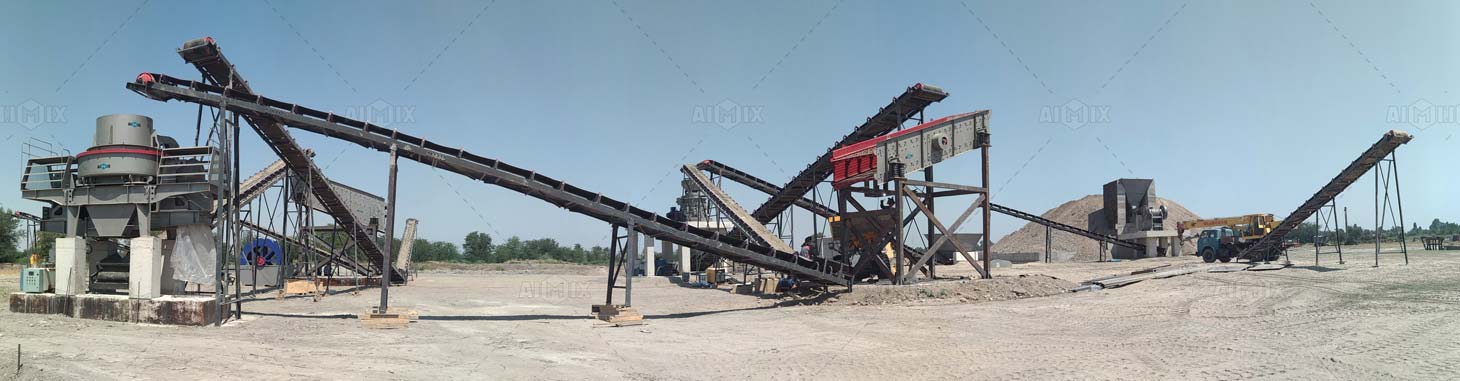
The hardness that makes granite valuable also increases production difficulty. Granite has high abrasiveness, which accelerates wear on crusher components, impact plates, and screening equipment.
Processing granite usually requires powerful crushing equipment, such as jaw crushers, cone crushers, and vertical shaft impact crushers. Energy consumption and maintenance requirements can therefore be higher compared with softer rock types.
Basalt: High-Performance Sand for Heavy-Duty Construction
Basalt is another highly durable volcanic rock widely used for aggregate production. Formed from rapidly cooled lava, basalt has a fine-grained structure and excellent resistance to compression, abrasion, and chemical deterioration.
Advantages of Basalt Manufactured Sand
Basalt manufactured sand performs exceptionally well in infrastructure projects where strength and durability are critical. Its high toughness allows concrete structures to withstand heavy traffic loads, repeated stress, and harsh environmental conditions.
The particle shape of crushed basalt can also provide excellent mechanical bonding in concrete mixtures. When properly processed, basalt sand can improve the stability of concrete structures and enhance resistance against deformation.
For large-scale transportation projects, basalt is often favored because its physical properties align closely with demanding engineering standards.
Challenges of Basalt Processing
Although basalt produces high-quality sand, it presents several processing challenges. Its extreme hardness and dense structure require robust basalt crushing systems with strong wear resistance.
Basalt crushing may generate more elongated particles if the equipment configuration is not optimized. Therefore, manufacturers often use impact crushing or shaping equipment to improve particle morphology and produce more cubical sand particles.
How Limestone Differs from Granite and Basalt in Sand Production
Limestone: Efficient Processing and Versatile Applications
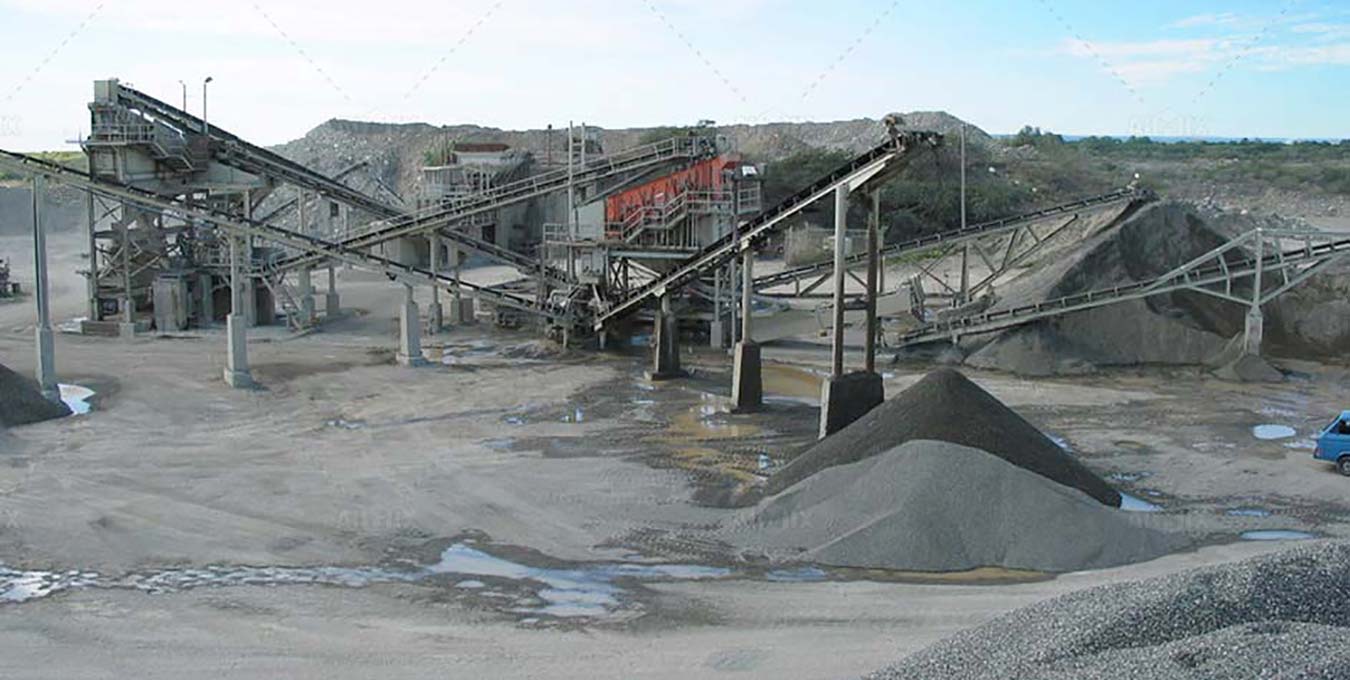
Limestone is a sedimentary rock composed primarily of calcium carbonate. Compared with granite and basalt, limestone is generally softer and easier to crush, making it an attractive option for manufactured sand production.
Advantages of Limestone Manufactured Sand
The primary advantage of limestone is processing efficiency. Because limestone has lower hardness, limestone crusher equipment experiences less wear, energy consumption is reduced, and production costs can be more manageable.
Limestone sand often has good particle shape characteristics after proper crushing and screening. It can be widely used in concrete production, road construction, mortar, and general building applications.
Another benefit is the availability of limestone resources in many regions. Local sourcing reduces transportation distances and can significantly lower the overall cost of manufactured sand production.
Limitations of Limestone Sand
The lower hardness of limestone can become a limitation in highly demanding applications. Compared with granite and basalt, limestone-based sand may provide lower resistance to abrasion and impact.
For ordinary construction projects, this difference may not be significant. However, for heavy-duty highways, high-speed rail systems, or structures exposed to severe conditions, stronger rock types may provide better long-term performance.
Selecting the Best Rock Type Based on Manufactured Sand Requirements
Application Requirements Determine the Most Suitable Material
There is no universal winner among granite, basalt, and limestone. The optimal choice depends on the intended application and required performance characteristics.
For high-strength concrete, bridges, and major infrastructure projects, granite or basalt is usually preferred because of their superior hardness and durability. These materials provide manufactured sand with excellent mechanical stability.
For general construction, commercial concrete, and projects where production efficiency and cost control are priorities, limestone can be a more practical option.
Crusher Configuration Also Influences Final Sand Quality
The quality of manufactured sand is not determined only by the rock type. The crushing process plays an equally important role.
A well-designed production line combines different crushing stages to control particle size and shape. Primary jaw crushers reduce large rocks, secondary crushers refine the material, and shaping equipment improves the final sand morphology.
For hard rocks such as granite and basalt, advanced shaping equipment can reduce excessive flakiness and produce higher-quality manufactured sand. For limestone, optimized crushing settings can prevent excessive powder generation while maintaining suitable gradation.
Balancing Quality, Cost, and Long-Term Production Efficiency
Choosing between granite, basalt, and limestone requires balancing several factors: raw material availability, equipment investment, operating costs, and final product requirements.
Granite and basalt provide exceptional performance but demand stronger equipment and higher processing capability. Limestone offers economic advantages through easier crushing and lower wear costs but may not satisfy every high-performance application.
Ultimately, the best rock for manufactured sand production is the one that matches project expectations and production conditions. By evaluating geological properties, processing requirements, and end-use standards, producers can develop a more efficient and reliable manufactured sand solution that delivers consistent quality for modern construction needs.