Rubber Tyred Gantry (RTG) cranes are essential equipment in modern container terminals, logistics yards, and port operations. They provide flexibility, mobility, and high efficiency in stacking and handling containers. However, when winter arrives and temperatures drop significantly, RTG cranes face serious operational challenges.
One of the most critical risks in cold weather is the freezing of hydraulic systems and components, which can lead to slow response, system failure, reduced lifting performance, and even safety hazards. Since RTGs rely heavily on hydraulic systems for hoisting, steering, and spreader operations, maintaining stable hydraulic performance in freezing conditions is essential.
To solve this problem, modern rubber tire gantry crane for sale is equipped with advanced heating systems designed specifically to protect hydraulic oil, pumps, valves, and pipelines from low-temperature damage.
This article explains how cold weather affects RTG hydraulic systems and how heating technologies ensure safe and reliable winter operation.
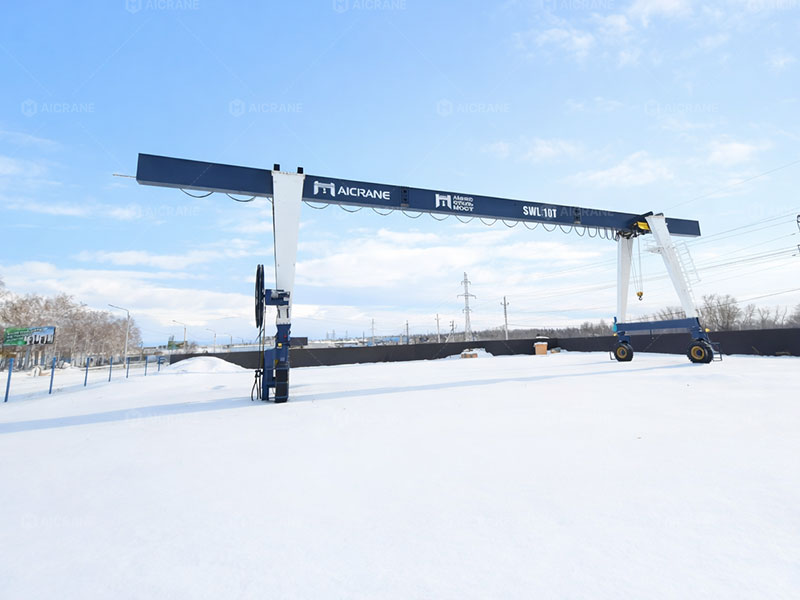
1. Why Cold Weather Is a Serious Challenge for RTG Cranes
Cold environments affect RTG cranes in multiple ways, but hydraulic systems are the most vulnerable.
Hydraulic Oil Thickening
When temperature drops:
- Hydraulic oil viscosity increases
- Flow becomes slower
- Pump efficiency decreases
This leads to:
- Delayed crane response
- Weak lifting performance
- Increased energy consumption
In extreme cold, oil can become so thick that it behaves almost like semi-solid grease.
Component Contraction and Seal Hardening
Low temperatures also cause:
- Rubber seals to harden and lose flexibility
- Metal components to contract
- Increased risk of leakage
Hydraulic systems depend on tight sealing, so even small seal failures can lead to pressure loss.
Risk of Ice Formation
Moisture in the system or surrounding environment can lead to:
- Ice blockage in pipes
- Valve malfunction
- Restricted hydraulic flow
This can completely stop crane operations if not controlled.
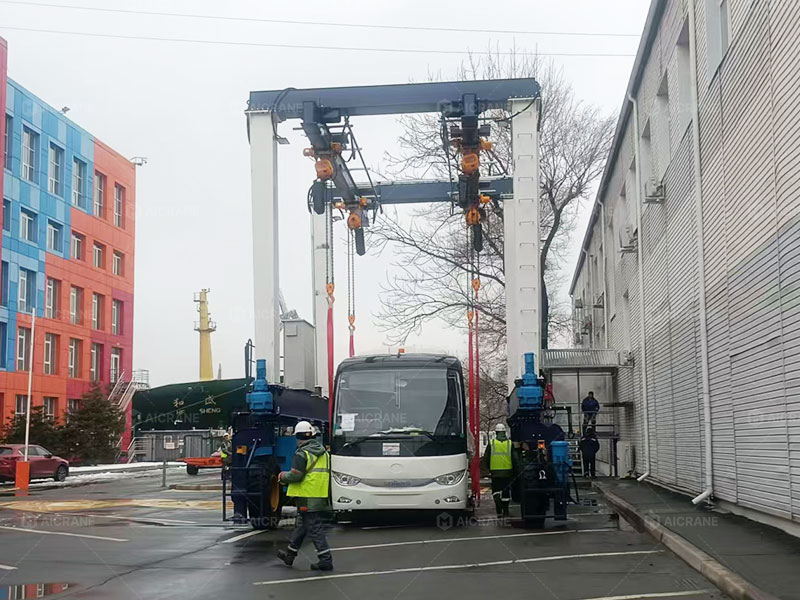
2. The Role of Heating Systems in RTG Cranes
To prevent cold-weather failures, RTG mobile gantry cranes are equipped with integrated heating systems that maintain optimal hydraulic operating conditions.
These systems are designed to:
- Maintain hydraulic oil at stable temperature
- Prevent freezing of valves and pipelines
- Ensure smooth fluid circulation
- Protect sensitive hydraulic components
Heating systems are not optional in cold-region RTG operations—they are essential for continuous productivity.
3. Hydraulic Oil Tank Heating Systems
The hydraulic oil tank is the core of the system, and maintaining its temperature is the first priority.
Immersion Heaters
One common solution is electric immersion heaters, installed directly inside or around the oil tank.
They:
- Heat hydraulic oil evenly
- Maintain stable operating viscosity
- Activate automatically when temperature drops
This ensures that oil remains fluid enough for proper pump operation.
External Tank Heating Jackets
Some RTGs use heating jackets wrapped around the tank, which:
- Provide uniform external heating
- Prevent localized overheating
- Reduce energy loss
This method is especially useful for large-capacity hydraulic systems.
4. Pipeline and Valve Heating Systems
Even if the oil tank is warm, hydraulic performance can still fail if pipelines and valves freeze.
Heat Tracing Systems
Heat tracing cables are installed along hydraulic lines to:
- Maintain fluid temperature inside pipes
- Prevent freezing in exposed sections
- Ensure smooth oil flow between components
These systems are widely used in rubber tyred port gantry cranes operating in sub-zero climates.
Valve Block Heating
Hydraulic control valves are extremely sensitive to temperature changes. Heating solutions include:
- Compact electric heaters near valve blocks
- Insulated valve housings
- Temperature sensors for automatic control
This ensures that directional control and pressure regulation remain stable.
5. Hydraulic Pump Protection in Low Temperatures
Hydraulic pumps are highly sensitive to oil viscosity changes.
Pre-Heating Circulation Systems
Before crane startup, a low-pressure circulation system:
- Heats oil gradually
- Reduces pump startup load
- Prevents dry friction damage
This is especially important after long idle periods in cold weather.
Pump Housing Heating
Some advanced RTG systems include:
- Local heating elements around pump casing
- Thermal insulation covers
- Temperature-controlled activation systems
This ensures pumps operate within safe thermal ranges.
6. Cabin and Operator Comfort Heating
Although not part of the hydraulic system, operator comfort is also important for safe operation.
Heated Operator Cabins
RTG cranes are equipped with:
- Cabin heaters
- Insulated glass windows
- Climate control systems
A comfortable operator:
- Responds faster
- Makes fewer errors
- Maintains safer operations
7. Smart Temperature Monitoring Systems
Modern RTG cranes do not rely only on passive heating—they use intelligent monitoring.
Temperature Sensors
Sensors are installed in:
- Hydraulic oil tanks
- Pumps
- Valve blocks
- External pipelines
They continuously monitor system conditions.
Automatic Heating Control
Based on sensor data:
- Heating systems turn on/off automatically
- Temperature is maintained within optimal range
- Energy consumption is optimized
This prevents overheating while ensuring freezing protection.
8. Insulation Design for Hydraulic Systems
Heating alone is not enough—thermal insulation is equally important.
Pipeline Insulation
Hydraulic pipes are wrapped with:
- Thermal insulation materials
- Weather-resistant protective layers
This reduces heat loss and improves efficiency.
Tank Insulation
Hydraulic tanks often include:
- Foam or composite insulation layers
- Heat-retaining coatings
- Enclosed structural housing
This helps maintain stable oil temperature even in extreme cold.
9. Lubrication and Hydraulic Oil Selection for Cold Weather
Oil selection plays a major role in cold climate performance.
Low-Temperature Hydraulic Oil
Special hydraulic fluids are designed to:
- Maintain flow at low temperatures
- Resist thickening
- Reduce startup resistance
These oils are essential for Arctic or sub-zero environments.
Anti-Wear Additives
Cold-weather hydraulic oils often include:
- Anti-wear compounds
- Anti-oxidation additives
- Anti-foam agents
These improve performance and extend system life.
10. Operational Strategies in Cold Weather RTG Use
Even with advanced heating systems, proper operation is essential.
Pre-Start Heating Procedures
Operators must:
- Warm up hydraulic system before full load operation
- Check temperature indicators
- Run idle cycles to stabilize oil flow
Load Management in Extreme Cold
In very low temperatures:
- Avoid sudden full-load lifting
- Gradually increase operational intensity
- Monitor hydraulic response carefully
11. Maintenance Considerations for Heating Systems
Heating systems themselves require regular maintenance.
Inspection Points
- Heater functionality
- Electrical connections
- Temperature sensor accuracy
- Insulation condition
Seasonal Maintenance
Before winter:
- Test all heating circuits
- Replace worn insulation
- Check hydraulic oil quality
This ensures reliable operation throughout the cold season.
Conclusion
Cold weather presents one of the most challenging environments for RTG crane hydraulic systems, where freezing temperatures can severely impact performance and safety. Without protection, hydraulic oil thickening, seal failure, and pipe freezing can bring operations to a halt.
However, with properly designed heating systems – including oil tank heaters, pipeline heat tracing, valve block heating, insulation layers, and intelligent temperature control – RTG cranes can operate reliably even in extreme winter conditions.
By combining thermal engineering, smart monitoring, and proper operational practices, ports and terminals can ensure continuous productivity, reduce downtime, and maintain safe and efficient container handling year-round – even in the harshest cold climates.